
The health and beauty aids industry continued to expand throughout 2026, with ingredients driving many of the top trends.
Need proof? Skinification (or the migration of skin care actives, philosophies, and ingredients into adjacent categories) carried body care and haircare into territory once reserved for facial products. Hyper-personalization pushed formulators toward diagnostics-driven active ingredients. Metabolic and longevity science inspired not only supplements but skincare as well.
These are just a few examples that help explain why the global beauty and personal care products market is on track to pass the $1.18 trillion mark by 2033 at a compound annual growth rate (CAGR) of 7.9%, according to Grand View Research.
Additionally, the global skin care products market is projected to grow to $202.8 billion and the premium hair care market to $75.2 billion by 2033. In the U.S. alone, the beauty and personal care products market is expected to reach $196.33 billion by 2033, growing at a 7.7% CAGR.
Looking a little closer into the future, there are a variety of health and beauty trends worth tracking in 2027, along with regulatory impacts that manufacturers will be monitoring to ensure their supply chain remains consistent and reliable.
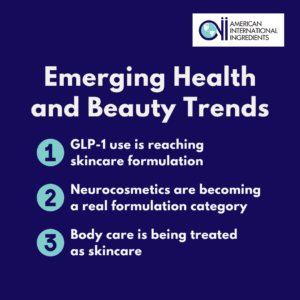 Emerging Health and Beauty Trends for 2027
- GLP-1 use is reaching skincare formulation: The massive popularity of the weight management tool is now shaping skin ingredient development. Since rapid weight loss can leave some people with skin looking lax and dull, formulators are responding with actives designed to help people look their best. According to McKinsey & Company, 63% of GLP-1 patients seeking facial aesthetic products or procedures were new to the category. Topping their list of concerns was skin laxity, skin quality, and facial fullness. Trend forecaster WGSN named this shift one of its top trends for 2026 and is steering brands toward firming and collagen-supporting actives, barrier repair, and ingredients tied to cellular energy. In practice, many of these formulas lean on familiar components like peptides, hyaluronic acid, bakuchiol, retinoid derivatives, and antioxidants positioned for a new type of consumer.
- Neurocosmetics are becoming a real formulation category: The connection between stress and skin health is quickly moving into the product development phase. Active ingredients are being formulated to target scalp and skin conditions at the same time. Grand View Research estimates the global neurocosmetics market will grow about 8.5% per year to reach $3.1 billion by 2030, and major ingredient suppliers are already moving in. For example, the European multinational company dsm-firmenich introduced its ALPAFLOR NEUROSOOTH ingredient in March 2026. Common building blocks in this space include calming peptides, adaptogens like ashwagandha, and soothing botanicals such as Centella asiatica.
- Body care is being treated as skincare: The line between the two areas is increasingly blurring, with beauty, metabolic health, and nervous system regulation discussed all at the same time. For ingredient buyers, this matters because it changes how body care products get positioned relative to facial actives. What used to be a simple moisturizer also may carry the same language and messaging that was once reserved for serums. Sales data backs this up. According to Circana, prestige body care sales rose 16% in the first half of 2026 and sun care climbed 19%, making them the biggest drivers of prestige skincare growth. Euromonitor International also forecast 6.4% global growth for body care in 2026. GLP-1 use is adding fuel as well, with Mintel pointing to rising concerns about body firmness, tone, and elasticity.
Regulatory Changes Worth Tracking
 The European Union is in the middle of a large reformulation wave, and the pace is clipping along faster than you may think. For example:
- A February 2026 regulation added 15 newly prohibited ingredients, along with restrictions on hexyl salicylate and silver. Known as Omnibus VIII (Commission Regulation (EU) 2026/78), those measures applied from May 2026 with no sell-through period, so non-compliant products had to be reformulated or pulled from the EU market.
- A separate regulation restricted 12 cosmetic ingredients over potential endocrine disruption and genotoxicity concerns, effective January 2027. Regulation (EU) 2026/909 bans triphenyl phosphate and tightens limits on familiar ingredients like citral, benzyl salicylate, and water-soluble zinc salts. Non-compliant products cannot be placed on the EU market after January 1, 2027, and most existing stock must be off shelves by mid-2028.
- The EU banned more than 1,700 substances outright, compared to just 11 restricted categories at the U.S. federal level. That means a formulation that’s fully compliant in the U.S. may not be sellable in the EU without considerable reformulation.
Allergen disclosure deadlines tightened as well. An updated EU INCI Glossary became mandatory in July 2026, and the disclosure of 81 fragrance allergens followed for any new product entering the market and forced some brands to update their labels and centralize ingredient lists. Under Regulation (EU) 2023/1545, these allergens must be named on the label when they exceed 0.001% in leave-on products or 0.01% in rinse-off products. Products already on the market have until July 31, 2028, to catch up.
Regulations are also evolving for the cosmetics industry. A proposed EU restriction looks to phase out PFAS and allow only limited exemptions. Buyers who think of PFAS as strictly an industrial issue may be caught off guard by reformulation demands for sunscreen, waterproof mascaras, hair styling products, and more.
In the U.S., the pressure is coming from several states. California, Colorado, Maryland, Minnesota, and Washington began banning intentionally added PFAS in cosmetics in January 2025. Connecticut, Maine, and Vermont followed in January 2026, with more states set to join in 2027 and beyond. Minnesota also required manufacturers to report intentionally added PFAS in their products by July 1, 2026.
At the federal level, the Modernization of Cosmetics Regulation Act (MoCRA) is still taking shape. The FDA’s proposed rule on fragrance allergen labeling, originally due in 2024, was pushed to May 2026 on the agency’s regulatory agenda, and the cosmetics good manufacturing practice (GMP) rule has been postponed. Until those rules are final, many manufacturers are using the EU allergen list and ISO 22716 as benchmarks, which makes complete ingredient documentation from suppliers more important than ever.
Additional Health and Beauty Trends to Watch
Here are a few more areas that are worth monitoring as they continue to build momentum throughout the next 12 months:
- Upcycled ingredients are moving past sustainability talking points and into a real ingredient category with real consumer demand. Materials like fruit peels and coffee extracts make up a global market for cosmetics that Fortune Business Insights projects will grow to roughly $451 million by 2034.
- Exosome and biomimetic delivery systems are edging toward the mainstream. Exosomes are tiny natural carriers that cells use to send signals to each other, while biomimetic delivery systems are lab-made versions built to work the same way. In personal care products, these carriers wrap an active ingredient in a protective shell and guide it to where it needs to go, rather than sitting on the surface of the skin or breaking down before it takes effect. Buyers should keep in mind that most exosomes found in retail skincare are plant-derived, and the FDA has not approved any exosome-based products for dermatologic use, so product claims need to stay within cosmetic territory.
- Blue Beauty, an ocean-first movement that encourages reef-friendly ingredient sourcing and sustainability, is expanding beyond sun care into packaging and marine-inspired biotech. Anyone who is sourcing marine-derived actives should keep a close eye on this movement and be prepared to adapt to the market.
Trending Health and Beauty Ingredients for 2027
 Xanthan Gum (80 Mesh)
- Why is it trending?
- A polysaccharide produced through fermentation that works as a viscosity enhancer, stabilizer, and emulsion support agent.
- Common applications
- Facial cleansers
- Treatments
- Moisturizers
- Masks
- Serums and essences
- What does it do?
- Stabilizes emulsions and prevents separation
- Creates a smooth, gel-like texture
- Extends shelf life and keeps formulas consistent
- Often paired with:
- Glycerin for improved moisture retention
- Sodium PCA or sodium hyaluronate for hydration
- Carbomer or hydroxyethylcellulose for added viscosity in gels
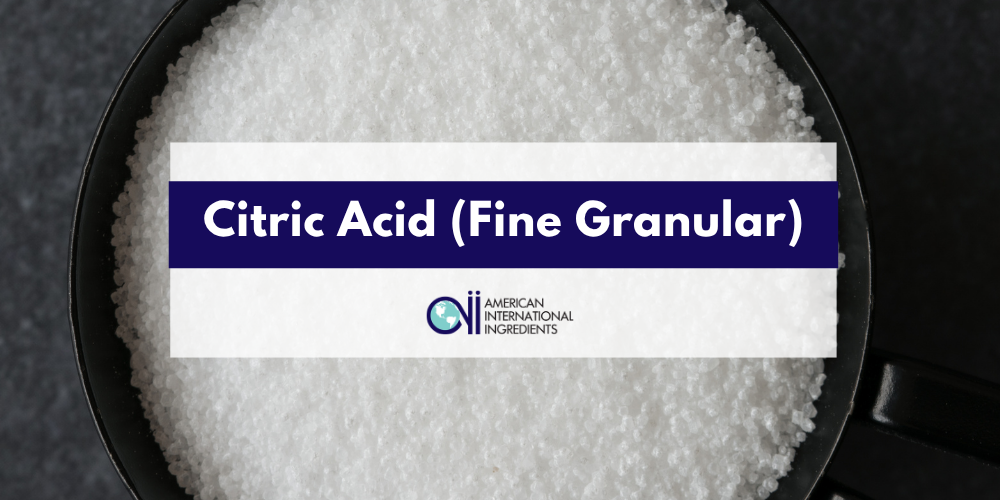 Citric Acid (Fine Granular)
- Why is it trending?
- A natural fruit acid that functions as a pH adjuster, mild exfoliant, and preservative booster.
- Common applications
- Conditioners
- Foundation
- Liquid hand soap
- Bath bombs
- Facial cleansers
- What does it do?
- Balances product pH
- Encourages mild chemical exfoliation
- Supports antioxidant and preservative systems
- Often paired with
- Sodium citrate for pH buffering
- AHAs like glycolic or lactic acid for enhanced exfoliation
- Vitamin C for brightening formulas
 Granulated Sugar
- Why is it trending?
- A gentle, natural physical exfoliant that dissolves quickly and doesn’t irritate the skin barrier
- Common applications
- Exfoliants and scrubs
- What does it do?
- Provides non-irritating mechanical exfoliation
- Promotes circulation and cell turnover
- Offers mild humectant benefits from naturally occurring glycolic acid
- Often paired with
- Coconut, jojoba, or sweet almond oil for a moisturizing base
- Essential oils for scent
- Honey or glycerin for added moisture retention
 Natural Starches (Arrowroot Powder, Tapioca Starch, Corn Starch)
- Why is it trending?
- Used for oil absorption, smooth texture, and dry feel, these starches also work as carriers for active ingredients
- Common applications
- Deodorants and antiperspirants
- Baby and body powder
- Dry shampoo
- What does it do?
- Absorbs excess moisture
- Soothes irritated or sensitive skin
- Contributes a silky application texture
- Often paired with
- Baking soda for odor neutralization
- Kaolin or bentonite clay for sebum control
- Zinc oxide for antimicrobial support
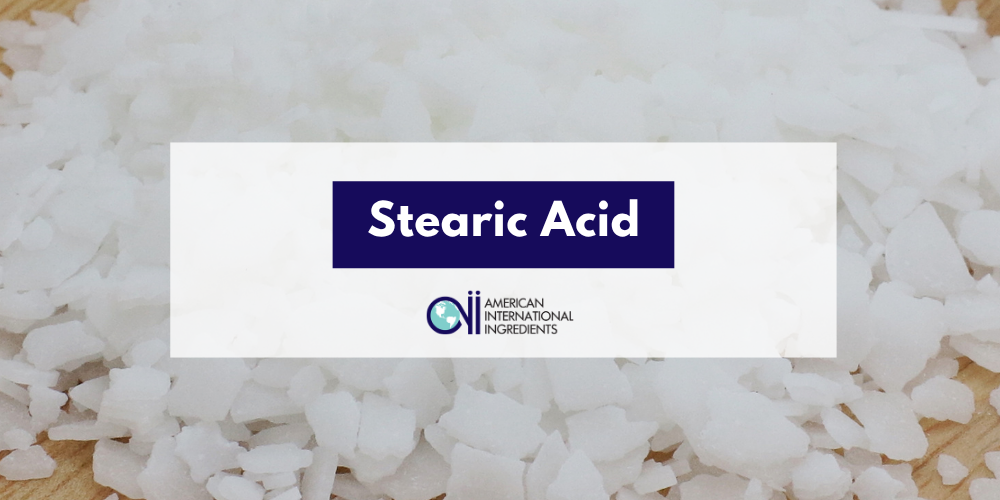 Stearic Acid
- Why is it trending?
- A saturated fatty acid used as an emulsifier, thickener, and surfactant. Vegetable-based versions from palm or coconut are widely available alongside traditional animal-derived sources
- Common applications
- Moisturizers
- Mascara
- Body wash
- Facial cleanser
- What does it do?
- Adds a rich, creamy texture
- Stabilizes emulsions in creams and lotions
- Works as a mild cleansing agent in rinse-off products
- Often paired with
- Cetearyl alcohol or glyceryl stearate as co-emulsifiers
- Caprylic/capric triglyceride for even emollient distribution
- Fatty alcohols for structure
Trending Ingredients by Industry
| Industry | Ingredients | Primary Benefits |
| Cosmetics / Personal Care | Sodium hyaluronate, peptides, exosomes, biotech ferments | Hydration, barrier support, brightening, anti-aging |
| Cleaning | Sucrose esters, vinegar, baking soda, castile soap | Biodegradable, non-toxic cleaning |
| Nutritional Supplements | Probiotics (targeted strains), berberine, NAD precursors, mushroom extracts | Gut health, metabolic support, cognition, stress |
Even more ingredients that are worth noting by category:
Cosmetics and personal care: Fermentation-derived sodium hyaluronate offers a sustainable, vegan alternative to traditional hyaluronic acid and can hold roughly 1,000 times its weight in water. Rice ferment filtrate and newer options like purple gromwell root yeast ferment are gaining ground as gentle, plant-based alternatives to synthetic brighteners. Meanwhile, well-established actives like peptides, ceramides, niacinamide, retinoids, and glycolic acid remain dermatologist recommendations for anti-aging, acne, and hydration.
Cleaning: Sucrose ester surfactants, made from sugar and fatty acids, offer biodegradable alternatives to petrochemical surfactants with adjustable foaming and emulsifying properties. On the simpler end, pantry staples like vinegar, baking soda, and castile soap continue to test well as effective, low-toxicity cleaners.
Nutritional supplements: Probiotic research is narrowing in on specific strains for immune and metabolic support, rather than general gut health claims. Adaptogens and mushroom extracts, including lion’s mane for cognition and ashwagandha for stress support, remain steady categories. Newer entries include berberine for blood glucose support, NAD+ precursors like nicotinamide riboside for cellular energy, and magnesium L-threonate for brain health.
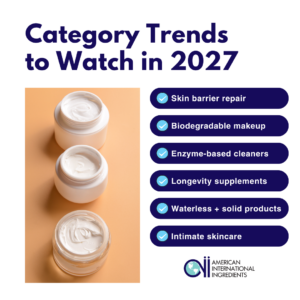 Category Trends to Watch
- Skin barrier repair creams and serums are addressing sensitive skin, post-procedure recovery, and general skin stress with ceramides, niacinamide, Centella Asiatica extract, and microbiome-supporting postbiotics.
- Biodegradable makeup is answering consumer demand for sustainability with natural pigments like beetroot and turmeric, plant-based waxes like carnauba and candelilla, and starches for texture and oil absorption.
- Enzyme-based cleaners are using protease, lipase, and amylase enzymes to break down proteins, fats, and starches, often paired with citric or lactic acid for pH control. Probiotic cleaning sprays are following a similar path, using beneficial bacteria strains to outcompete pathogens on surfaces.
- Longevity supplements are being built around nicotinamide mononucleotides (NMN), astaxanthin, and senolytics like fisetin and quercetin to target cellular health and mitochondrial function.
- Waterless and solid personal care products are gaining traction for their minimalist, travel-friendly appeal, relying on gentle surfactants like sodium cocoyl isethionate along with clays and natural emollients.
- Intimate skincare is a growing subcategory, with prebiotics, calendula, chamomile, and lactic acid supporting pH balance and reducing irritation.
What These Health and Beauty Trends Mean for Ingredient Buyers
The throughline across all of these health and beauty trends is that consumers want products that are sustainable, transparent, and backed by real science, whether that’s a fermentation-derived active or a staple with decades of proven performance.
For buyers, that means the sourcing and compliance conversation matters as much as each individual ingredient. Working with a partner who can help your organization stay ahead of these health and beauty trends starts with understanding where your current formulations stand today and where they need to be tomorrow.
American International Ingredients: A Leading Health & Beauty Ingredient Supplier
American International Ingredients is part of a family of companies that has helped HBA manufacturers solve ingredient problems and streamline their supply chain operations. Our relationships with top organic ingredient manufacturers across the globe allow us to be a low-cost personal care ingredient supplier to your operations. We provide our customers with unequaled industry knowledge, personalized supply chain solutions, and a product line of more than 2,500 personal care and cosmetic ingredients.
We maintain complete documentation for each ingredient we offer, giving you the transparency and peace of mind to meet tight deadlines and foster innovation.
For more information about ingredient sourcing, pricing, or additional information, fill out our contact form or call (866) 944-2434 to speak with one of our sourcing specialists.